Complete Guide: Mould in Buildings
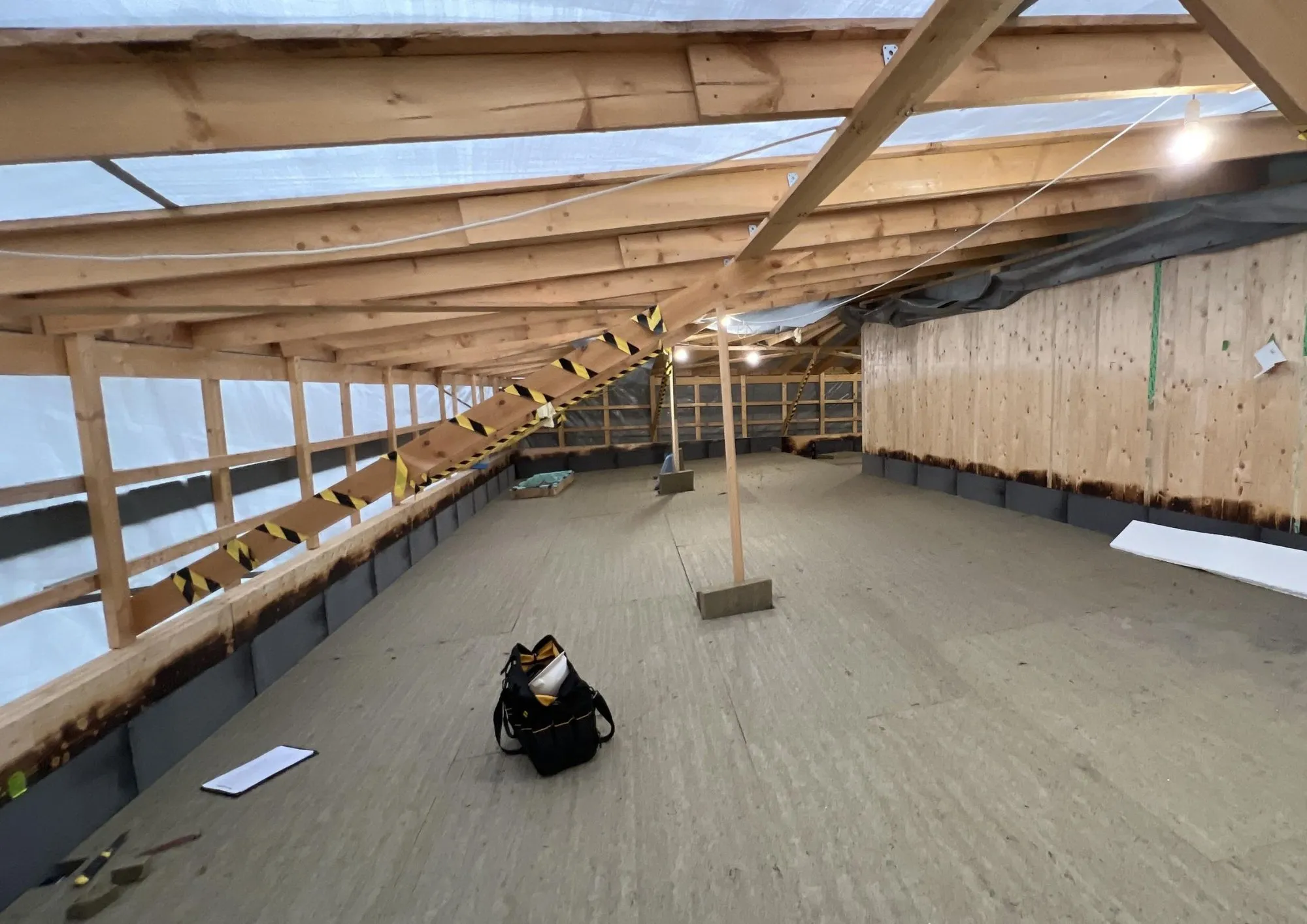
Mould or mold, depending on where you are in the world, is one of the most common and underestimated hazards in the built environment. It spreads quietly, often out of sight, and by the time it is visible it has usually already been present for weeks or months. This guide covers every stage: what mould actually is, the precise conditions that allow it to thrive, the health consequences of exposure, proven methods for detection, and evidence-based strategies for prevention and removal.
What is mould?
Mould refers to a broad group of fungi that survive by metabolising organic material. Most people encounter it first in the kitchen - the fuzzy patches on forgotten bread or the bloom on ageing fruit. In buildings, however, the conditions for mould growth are frequently present, and the consequences are far more serious.
Because buildings contain a wide variety of organic materials: timber framing, OSB boards, plasterboard, wallpaper paste, and paint, mould can colonise them all, provided the conditions are right. Once established, a colony can spread rapidly through a structure, moving through air currents, along surface moisture films, and even through some building materials.
Optimal conditions for mould growth
Understanding why mould grows is the foundation of preventing it. Three factors must align simultaneously: a food source (organic material), warmth, and moisture. Remove any one of these and growth stops.
70% Relative Humidity: Minimum RH at which mould growth can begin on most building surfaces
20–30°C Temperature: Optimal temperature range, the sweet spot that accelerates spore germination
<5°C Growth Stops: Below 5°C or above 50°C, mould growth ceases, but spores survive and resume when conditions return
Critically, cool temperatures do not kill mould. A colony that ceases growing during a cold spell will resume the moment warmth and humidity return. This is a common misunderstanding in buildings that experience seasonal temperature swings, such as holiday homes, unheated storage areas, and cavity walls.
What causes mould on ceilings and walls?
Ceiling mould is particularly common and tends to alarm homeowners because it is so visible. In most cases, ceiling mould is caused by condensation, warm, humid air rising and meeting a cold ceiling surface, particularly above poorly insulated roofs or near thermal bridges. Bathroom and kitchen ceilings are especially vulnerable because cooking and bathing generate large quantities of water vapour. Cold exterior walls are another classic location: warm indoor air meets a cold surface, the air cools, its relative humidity climbs above the critical threshold, and mould takes hold.
Condensation and mould: the connection
Condensation occurs when warm, humid air contacts a surface cold enough to bring it below its dew point. The resulting surface moisture creates ideal conditions for mould. Inadequate ventilation, thermal bridging, and insufficient insulation are the most common building-related causes of persistent condensation and mould problems.
Black mould: the most feared variety
The term black mould (also written as black mould) most commonly refers to Stachybotrys chartarum, though several other species, including Cladosporium and Aspergillus niger, can also appear black or very dark. The colour comes from the pigmentation of the spores and mycelium, not from any inherent toxicity, though Stachybotrys is among the more potent mycotoxin producers.
Black mould tends to grow on materials with high cellulose content, wallboard, ceiling tiles, timber, and requires consistently high moisture levels to develop. Finding it is often a sign of a persistent, ongoing dampness problem rather than a one-off event.
Why is mould dangerous?
Although mould does not structurally degrade the materials it grows on, it is feeding on them, not digesting their load-bearing properties, it poses meaningful health risks to the people who live or work in affected buildings.
Mould affects indoor air quality in two distinct ways:
- While mould is actively growing
Growing mould secretes mycotoxins, biologically active compounds, and releases spores into the air to reproduce. Both can travel through the building via air currents and can penetrate some building materials. Neither is welcome in any part of the structure, open or enclosed.
- After mould has dried out or died
Dead mould spores remain in place on surfaces and in dust. Movement in the space, ootsteps, air handling, renovation work, can disturb them and send them airborne, where they are inhaled and make contact with mucous membranes and airways. This is why mould remediation must be thorough: a dead colony is not a safe colony.
Documented health consequences of prolonged mould exposure include mucosal irritation, respiratory difficulties, persistent headaches, and impaired concentration. Sensitivity varies considerably between individuals. Research has consistently found that children are more susceptible to the effects of mould than adults, making mould in schools, nurseries, and family homes a particularly serious concern.
How do you detect mould?
The most obvious detection method, looking for it or smelling its characteristic heavy, musty odour, is also the least reliable. By the time mould is visible or the smell is noticeable, a colony has usually been established for some time. Professional mould assessment typically combines several methods.
The most effective approach is to make the building environment consistently hostile to mould, that is, to keep relative humidity below the critical threshold for growth. Research by Viitanen & Ojanen (2007) established that for every temperature, there is a critical relative humidity value below which conditions are too dry for mould to establish. Above that value, a time-based risk accumulates. The longer conditions remain above the threshold, the more likely growth becomes.
Monitoring these conditions continuously is the only reliable way to know whether a building is at risk. One-off manual measurements provide a snapshot; what matters for mould is the integrated exposure over time. Wireless temperature and humidity sensors placed in the highest-risk zones of a building, typically roof spaces, cavities, bathrooms, cold corners, and sub-floor spaces, provide the continuous data needed to identify problems before they escalate.
The critical relative humidity formula
At any given temperature T (in degrees Celsius), the critical relative humidity RHcrit can be estimated. For wood-based materials, this sits at approximately 80% RH at 20°C and climbs as temperature rises. The “mould curves” derived from this model define time-based risk zones: how long a building can remain above the critical threshold before growth is statistically likely to occur.
Practical prevention checklist
Ventilation: Ensure adequate background ventilation and boost ventilation after cooking and bathing. Trickle vents and MVHR systems can reduce interior humidity significantly.
Insulation: Eliminate thermal bridges where cold surfaces allow condensation to form. Well-insulated structures maintain warmer surface temperatures throughout.
Moisture sources: Fix leaks promptly. Ground moisture rising through unprotected slabs and foundations is a common but overlooked contributor.
Continuous monitoring: Deploy wireless sensors in high-risk areas to track temperature and RH over time, not just when you think to check.
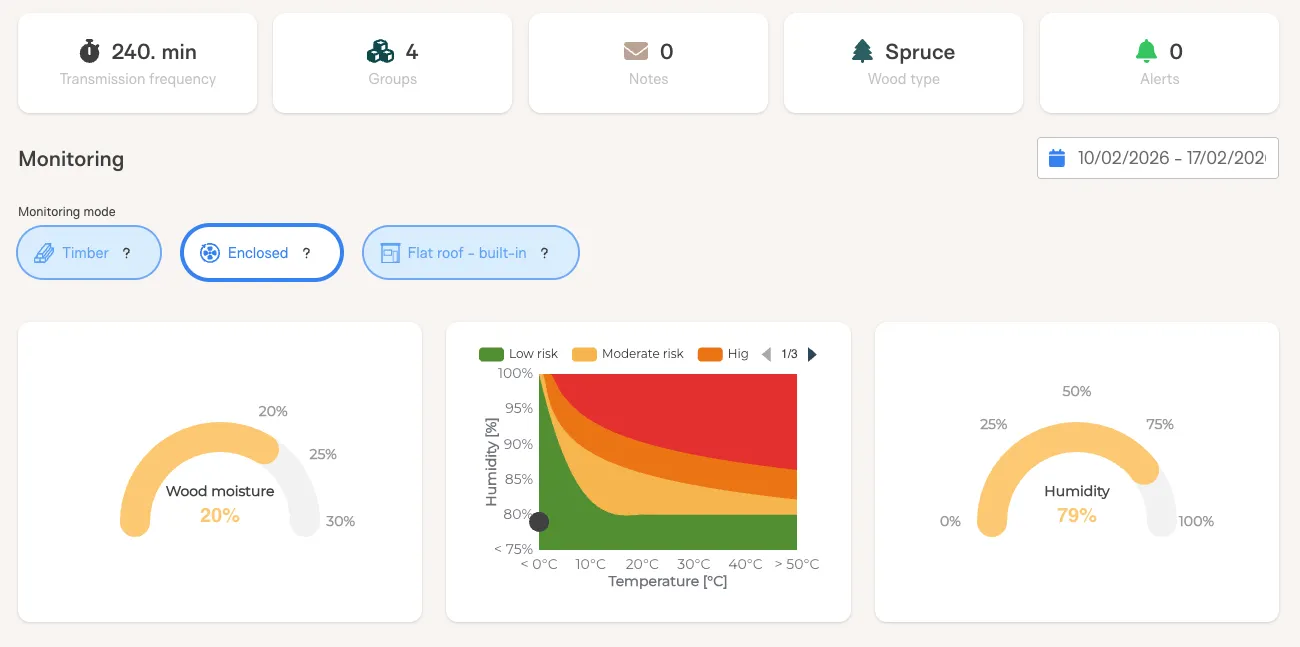
Monitor mould risk continuously with Tector
The Tector platform integrates the Viitanen & Ojanen mould curves directly into its sensor dashboards. Every sensor shows where conditions sit relative to the growth threshold in real time, and alerts are triggered automatically when risk accumulates, so you know before mould does.
How do you get rid of mould? The complete removal guide
When mould has been confirmed, remediation has two stages: removing the source of the moisture problem, and cleaning up the colony itself. Cleaning without fixing the underlying cause is futile, mould will return.
How to clean away black mould from walls and ceilings
For surface mould on non-porous materials (tiles, glass, some painted surfaces), cleaning is typically possible without replacing the substrate. The area should be worked wet to avoid dispersing spores into the air, using a suitable mould remover, commonly a dilute bleach solution or a dedicated fungicidal wash. Always work with ventilation to the outside open and wear an appropriate mask (FFP2 or better) and gloves.
On porous materials, plasterboard, timber, MDF, natural-fibre wallpapers, surface cleaning is usually insufficient because hyphae penetrate the material. These materials often need to be removed and replaced.
Method 01 Demolition & disposal
Method 02 Mechanical cleaning
Method 03 Dry ice blasting
Method 04 Chemical treatment
Method 05 Fog / ULV cleaning
Method 06 Dry steam cleaning
The method selected depends on the extent of the infestation, the location, the material involved, and whether the area is accessible. Dry ice blasting, for instance, is particularly effective for large structural timber elements where demolition is not practical. Chemical fogging can treat large enclosed spaces, such as roof voids, without requiring manual access to every surface. A specialist surveyor will recommend the most appropriate approach for the specific situation.
Important: always fix the source first
No cleaning method will provide lasting results if the conditions that caused the mould are still present. Before any remediation work begins, the source of the excess moisture, whether a leak, condensation, rising damp, or inadequate ventilation, must be identified and corrected. After remediation, post-treatment monitoring confirms that conditions remain below the mould-risk threshold.
References & Sources
- BYG-ERFA: Skimmel i bygninger – vækstbetingelser og forebyggelse
- Sundhedsstyrelsen: Helbredsproblemer ved fugt og skimmelsvampe i bygninger
- Kathrine Birkemark Olesen, Centerchef for Indeklima & Bygningsundersøgelser, Teknologisk Institut
- Molds in floor dust and building-related symptoms among adolescent school children: a problem for boys only? PubMed, 2005
- Skimmelsvampe – Måling og analyse, Skimmel.dk
- Olsson, L. (2020). Moisture safety in CLT construction without weather protection. E3S Web of Conferences
- Viitanen, H. & Ojanen, T. (2007). Improved model to predict mould growth in building materials. ASHRAE Buildings Conference
- Byggesagkyndig.nu – Afrensning og rengøring af skimmelsvamp