Flat-roof handover: how continuous monitoring supports QA and the defects period
Handover checks a flat roof at one moment. The membrane is inspected, the outlets are tested, the paperwork is signed, and the roof is accepted. Most of what can go wrong with a flat roof happens after that moment, hidden inside a sealed build-up, and shows itself as a stain on a ceiling months or years later - by which point the question of what happened, where, and since when has no good answer.
This article is about the alternative: a roof that has been monitored continuously from construction, and what that gives both parties at handover and through the defects period. It is about continuous, embedded, wireless monitoring - sensors that stay in the roof and keep reporting - not a one-off survey. It is not legal advice; what any contract, warranty or defects period covers is a matter for the contract.
What handover checks can and cannot see
A handover inspection can confirm that the membrane is complete, that laps and details look right, that outlets drain, and that the roof is dry on the surface. It cannot see inside the insulation. It cannot tell whether water got into the build-up during construction and was sealed in, whether a detail that looks right is letting vapour through from below, or how the roof will behave when the first cold nights arrive after a warm autumn.
Those are the conditions that produce most flat-roof problems, and none of them are visible at handover. Continuous monitoring does not replace the inspection; it adds the record the inspection cannot produce.
What a monitored roof hands over
A roof monitored through construction with Tector’s flat-roof moisture monitoring system hands over more than a certificate:
- Sensor positions on the roof plan - each sensor registered against its location, so an alert can be placed on the roof without a search.
- The moisture history of the build - readings over time from each position, showing what happened during construction: the wet weeks, the drying, any ingress and how it was dealt with.
- The alert log - what was flagged, when, and what was done.
- A live system - the same sensors keep reporting after handover; nothing is reinstalled or reconfigured.
- Dashboard access - transferred to the owner or facility manager, with the construction-period history retained. When the platform has been used actively through the project, all of the above is already there; nothing has to be assembled for the handover file.
The practical point is that the owner receives an account of the roof rather than an assurance about it. Where a problem does surface later, the record shows whether it was there at handover.
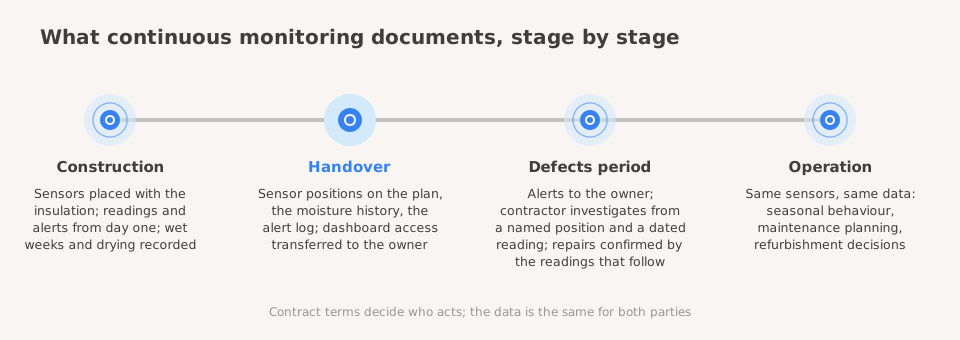
The same sensors and the same data through every stage; the contract decides who acts.
The defects period: what the data does for each party
However the contract names it - defects period, rectification period, warranty period - the years after handover are when a flat roof’s construction-phase problems declare themselves. Continuous data changes that period for both sides.
For the contractor
- Locate, don’t excavate. An alert names a sensor position and a time. Investigation starts at that position, not with a survey of the whole roof.
- Distinguish an event from a season. The readings show whether moisture at a position is rising after a rain event (ingress) or moving with the season (condensation behaviour), which points to a different cause and a different fix.
- Evidence for work done right. A roof that stayed dry through construction and the first winter has the record to show it. Where a defect is found and repaired, the readings afterwards show the repair worked.
For the owner
- Know before it shows. Alerts arrive when moisture at a position moves outside its threshold, not when a ceiling stains.
- Escalate with facts. A defects-period conversation that starts from a dated reading at a named position is shorter than one that starts from a stain.
- Plan maintenance. The same data continues into operation and supports the maintenance regime, drainage checks and any refurbishment planning.
None of this needs a new inspection or a new party on site. The sensors were placed during construction; the work after handover is reading the data and acting on the alerts.
What the seasons do after handover
A flat roof’s moisture behaviour is seasonal, and the first year after handover shows it. Warm summer conditions drive moisture in the build-up downwards; cool autumn nights push condensation risk up as heating comes on and the roof deck sits below dew point for long hours. Both patterns are described in why condensation in flat roofs spikes in autumn and moisture in warm roofs during summer, and both were seen in the research on flat-roof moisture with Teknologisk Institut, where live monitoring on real roofs confirmed what laboratory tests could not fully replicate.
For a newly handed-over roof this matters twice: a seasonal pattern that looks alarming in the first summer may be normal for the build-up, and a rise that does not follow the season is the one to investigate. Continuous data is what tells them apart.
Responsibilities at handover
The one thing that has to be agreed before handover, not discovered after it, is who receives and acts on alerts once the contractor’s site team has gone.
| At handover | Typically |
|---|---|
| Alert recipients during construction | Main contractor’s site management |
| Alert recipients after handover | Owner or facility manager, named by role |
| Dashboard access and history | Transferred to the owner, history retained |
| Response to an alert during the defects period | Owner notifies; contractor investigates and repairs; the readings afterwards confirm the repair |
| Gateway location and power after completion | Owner |
The contract decides the allocation; the specification should already contain it, and the handover meeting confirms it. A fuller map of responsibilities across the whole project is a separate subject; this article only asks that the hand-off is explicit.
If the roof was not monitored during construction
Monitoring can start at handover, or later. Sensors can be retrofitted into an existing roof by drilling a small hole through the roof membrane, placing the sensor in the insulation layer and sealing the hole. A roof monitored from handover onwards does not have the construction-phase record, but it has everything else in this article from the day the sensors go in - and the sensors are designed for a service life of up to 25 years, which outlasts the defects period.
Two examples, two moments
Two published cases, among many monitored roofs, show the two moments this article is about.
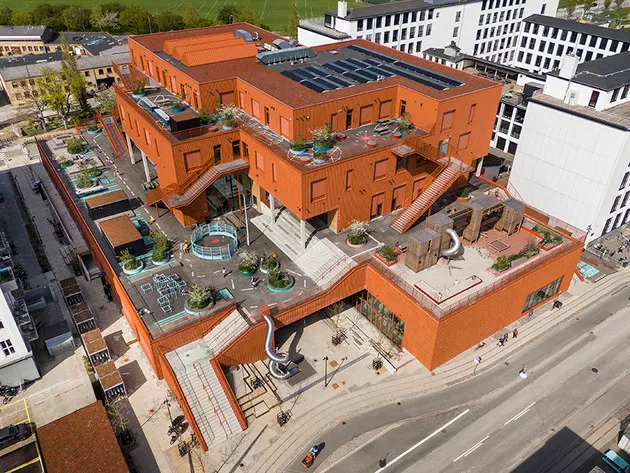
During construction. On the Copenhagen school roofs - four surfaces at different levels under gardens, solar panels and play equipment - sensors placed at the key locations picked up rain that had entered through a leaking temporary cover, and told the contractor where the water had come in and whether the roof needed further drying before it was closed. That is a defect found and dealt with before handover, with the record to show it. Read the school roofs case.
Through the build and beyond. At Northgate House in Oxford, on a mass-timber building with a CLT flat roof and a history of construction-phase leaks, sensors were positioned across each floor at the areas most likely to see water ingress. The system caught a leak that might otherwise have gone unnoticed and supervised the drying of the roof - the moisture history that a handover would otherwise not include. Read the Northgate House case.
Roofs approaching handover now
If a roof is going to handover in the coming months, monitoring can be specified into the remaining works or retrofitted at completion; if a roof is already in its defects period, it can be monitored from now. In each case the starting point is the same: tell us about the roof and its stage, and you receive a recommended monitoring approach, indicative coverage and placement, the installation considerations and a suggested next step.
Request a project assessment. For the system itself, see moisture monitoring for flat roofs and how it works.